


Introduction
Most reward systems in crypto struggle with one major problem: sustainability. Many projects distribute rewards to holders without creating real economic activity behind those rewards. Over time, this often leads to inflation, passive farming, and weak user engagement.
Wurk approaches this problem differently.
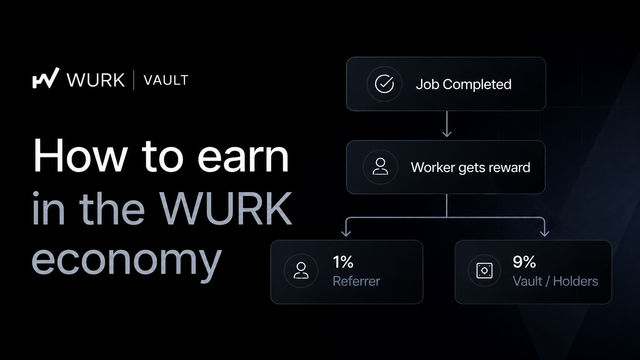
Instead of rewarding users simply for holding tokens, the Wurk ecosystem connects platform activity directly to the reward system through the Wurk Vault. The result is a model where jobs, users, holders, and ecosystem growth all feed into one another.
After the March reward update, this system became even more focused on rewarding active participation rather than passive holding. That change significantly reshaped how rewards are distributed and made the ecosystem more efficient.
In this blog, I’ll break down how the Wurk Vault works, how rewards are generated, why the March update mattered, and why the overall model is one of the more interesting ecosystem-driven reward systems in Web3 microjob platforms.
Understanding the Wurk Vault
The Wurk Vault is the reward distribution engine of the Wurk ecosystem.
At its core, the vault collects value generated through platform activity and redistributes part of that value back to eligible participants.
The vault creates a circular ecosystem:
Users complete jobs on the platform Platform activity generates fees and ecosystem value A portion flows back into the vault Vault rewards are distributed to eligible holders Holders are incentivized to stay active and participate Increased activity helps grow the ecosystem further
This creates a direct relationship between platform usage and holder rewards.
Unlike many passive reward systems that rely heavily on emissions or inflation, the Wurk Vault is tied to actual ecosystem activity.
How Vault Rewards Are Distributed
To qualify for vault rewards, users must:
Hold at least 100,000 WURK tokens Be active on the platform
This second requirement became especially important after the March update.
The vault periodically distributes rewards among eligible users. Because rewards are tied to active participation, users who contribute to the ecosystem are prioritized over passive wallets.
The reward structure creates a strong incentive alignment:
Workers are incentivized to stay active Holders are incentivized to participate Platform growth benefits active ecosystem members Passive farming becomes less profitable
This model helps ensure that rewards circulate among users who actually strengthen the ecosystem.
How Completed Jobs Help Refill the Vault
One of the most interesting parts of the Wurk ecosystem is that completed jobs help sustain the reward system.
Every time activity occurs on the platform — whether through microtasks, campaigns, or user engagement — value flows through the ecosystem.
Instead of rewards existing independently from platform usage, Wurk connects them directly.
This means:
More platform activity can contribute to larger vault growth More users completing jobs can increase ecosystem value The reward pool can become healthier as adoption grows Active participants help generate the rewards they later receive
This is very different from systems where rewards are funded only by token inflation.
In many traditional staking systems, rewards are often disconnected from real utility. Tokens are emitted continuously whether the platform grows or not.
The Wurk model introduces a stronger economic feedback loop.
Why the Vault Creates a Strong Ecosystem
The vault creates a relationship between three major groups:
- Builders and Platform Operators
Builders benefit because increased platform activity strengthens ecosystem engagement.
- Workers and Active Users
Users benefit because participation can generate both direct earnings from jobs and additional vault rewards.
- Holders
Holders benefit because ecosystem growth can improve vault performance and increase reward opportunities.
All three groups depend on one another.
That alignment is important.
Many crypto ecosystems fail because incentives become disconnected. Holders only want price appreciation, users only want rewards, and the platform struggles to maintain growth.
Wurk’s model attempts to connect these incentives into a single ecosystem loop.
The March Reward System Update
The March update was one of the most important changes to the Wurk Vault system.
Before March
Before the update, vault rewards were distributed to all holders with at least 100k WURK tokens.
This meant users could simply hold tokens and receive rewards without actively participating in the ecosystem.
While this attracted holders, it also created several problems:
Passive farming became common Some users contributed little or nothing to platform growth Rewards were spread across many inactive wallets Active users received a smaller portion of the rewards After March
After the update, vault rewards became restricted to holders who:
Hold at least 100k WURK Are actively participating on the platform
This fundamentally changed the reward dynamics.
Instead of rewarding passive holding alone, the system started rewarding ecosystem contribution.
Why Rewards Became Larger After the Update
One major effect of the March update was that rewards for active users increased significantly.
This happened because the reward pool was no longer divided among large numbers of inactive holders.
Now:
Fewer wallets qualify Rewards are concentrated among active participants Ecosystem contributors receive a larger share Passive dilution is reduced
This creates a much stronger incentive to remain engaged.
For active users, the change improved reward efficiency dramatically.
In many reward systems, highly active participants often feel under-rewarded because passive wallets absorb too much value. Wurk addressed this problem directly.
Why Rewarding Active Users Creates a Healthier Ecosystem
Rewarding active users instead of passive holders may create a more sustainable long-term ecosystem for several reasons.
- It Encourages Real Participation
Users now have a reason to remain involved with the platform rather than simply holding tokens.
That activity strengthens:
Platform engagement Job completion rates User retention Community growth 2. It Reduces Passive Farming
Passive farming can weaken ecosystems because users extract rewards without contributing value.
By requiring activity, Wurk filters out many purely passive participants.
- It Aligns Rewards With Contribution
The users helping grow the platform receive a larger share of rewards.
This creates stronger fairness and incentive alignment.
- It Creates More Organic Growth
Because rewards are tied to actual ecosystem activity, growth can become more organic rather than purely speculative.
That can improve ecosystem stability over time.
Transparency and Trust in the Vault System
Another interesting aspect of the Wurk ecosystem is transparency.
The ability to view vault history, wallet analytics, and earnings data helps users understand how the system operates.
Transparency matters in reward ecosystems because users want to verify:
Reward consistency Distribution patterns Wallet performance Historical earnings Ecosystem growth trends
Public visibility into vault mechanics can improve trust and help users make informed decisions.
The vault searcher and wallet tracking tools also make it easier to analyze how participation affects rewards over time.
Why the Wurk Model Is Interesting
Personally, I think the most interesting part of the Wurk ecosystem is how it combines utility, participation, and rewards into a connected loop.
A lot of Web3 projects focus heavily on token holding while struggling to generate real platform activity.
Wurk flips that structure.
Instead of making activity secondary, activity becomes central to the reward model.
That changes user behavior.
People are encouraged not only to hold tokens, but also to:
Complete jobs Stay active Engage with the ecosystem Contribute to platform growth
This creates a stronger connection between platform success and user rewards.
The March update especially improved this structure by reducing passive extraction and concentrating rewards toward active ecosystem participants.
From a sustainability perspective, this approach appears stronger than systems that reward inactivity equally.
As the platform grows and more jobs are completed, the vault mechanism could become even more powerful because ecosystem activity itself helps drive value back into rewards.
Final Thoughts
The Wurk Vault is more than just a reward pool.
It is an ecosystem mechanism designed to connect platform activity, token holding, and user participation into one system.
The March update significantly strengthened this model by shifting rewards away from passive holders and toward active ecosystem contributors.
That change:
Reduced passive farming Increased rewards for active users Improved incentive alignment Encouraged deeper participation Strengthened the connection between platform growth and rewards
In a space where many reward systems struggle with sustainability, Wurk’s activity-driven model stands out as an interesting alternative.
If the platform continues growing and attracting active users, the vault system could become an increasingly strong example of how Web3 ecosystems can align utility with rewards in a more sustainable way.
Suggested Visuals To Add Before Publishing
To improve th
Introduction
Most reward systems in crypto struggle with one major problem: sustainability. Many projects distribute rewards to holders without creating real economic activity behind those rewards. Over time, this often leads to inflation, passive farming, and weak user engagement.
Wurk approaches this problem differently.
Instead of rewarding users simply for holding tokens, the Wurk ecosystem connects platform activity directly to the reward system through the Wurk Vault. The result is a model where jobs, users, holders, and ecosystem growth all feed into one another.
After the March reward update, this system became even more focused on rewarding active participation rather than passive holding. That change significantly reshaped how rewards are distributed and made the ecosystem more efficient.
In this blog, I’ll break down how the Wurk Vault works, how rewards are generated, why the March update mattered, and why the overall model is one of the more interesting ecosystem-driven reward systems in Web3 microjob platforms.
Understanding the Wurk Vault
The Wurk Vault is the reward distribution engine of the Wurk ecosystem.
At its core, the vault collects value generated through platform activity and redistributes part of that value back to eligible participants.
The vault creates a circular ecosystem:
Users complete jobs on the platform Platform activity generates fees and ecosystem value A portion flows back into the vault Vault rewards are distributed to eligible holders Holders are incentivized to stay active and participate Increased activity helps grow the ecosystem further
This creates a direct relationship between platform usage and holder rewards.
Unlike many passive reward systems that rely heavily on emissions or inflation, the Wurk Vault is tied to actual ecosystem activity.
How Vault Rewards Are Distributed
To qualify for vault rewards, users must:
Hold at least 100,000 WURK tokens Be active on the platform
This second requirement became especially important after the March update.
The vault periodically distributes rewards among eligible users. Because rewards are tied to active participation, users who contribute to the ecosystem are prioritized over passive wallets.
The reward structure creates a strong incentive alignment:
Workers are incentivized to stay active Holders are incentivized to participate Platform growth benefits active ecosystem members Passive farming becomes less profitable
This model helps ensure that rewards circulate among users who actually strengthen the ecosystem.
How Completed Jobs Help Refill the Vault
One of the most interesting parts of the Wurk ecosystem is that completed jobs help sustain the reward system.
Every time activity occurs on the platform — whether through microtasks, campaigns, or user engagement — value flows through the ecosystem.
Instead of rewards existing independently from platform usage, Wurk connects them directly.
This means:
More platform activity can contribute to larger vault growth More users completing jobs can increase ecosystem value The reward pool can become healthier as adoption grows Active participants help generate the rewards they later receive
This is very different from systems where rewards are funded only by token inflation.
In many traditional staking systems, rewards are often disconnected from real utility. Tokens are emitted continuously whether the platform grows or not.
The Wurk model introduces a stronger economic feedback loop.
Why the Vault Creates a Strong Ecosystem
The vault creates a relationship between three major groups:
- Builders and Platform Operators
Builders benefit because increased platform activity strengthens ecosystem engagement.
- Workers and Active Users
Users benefit because participation can generate both direct earnings from jobs and additional vault rewards.
- Holders
Holders benefit because ecosystem growth can improve vault performance and increase reward opportunities.
All three groups depend on one another.
That alignment is important.
Many crypto ecosystems fail because incentives become disconnected. Holders only want price appreciation, users only want rewards, and the platform struggles to maintain growth.
Wurk’s model attempts to connect these incentives into a single ecosystem loop.
The March Reward System Update
The March update was one of the most important changes to the Wurk Vault system.
Before March
Before the update, vault rewards were distributed to all holders with at least 100k WURK tokens.
This meant users could simply hold tokens and receive rewards without actively participating in the ecosystem.
While this attracted holders, it also created several problems:
Passive farming became common Some users contributed little or nothing to platform growth Rewards were spread across many inactive wallets Active users received a smaller portion of the rewards After March
After the update, vault rewards became restricted to holders who:
Hold at least 100k WURK Are actively participating on the platform
This fundamentally changed the reward dynamics.
Instead of rewarding passive holding alone, the system started rewarding ecosystem contribution.
Why Rewards Became Larger After the Update
One major effect of the March update was that rewards for active users increased significantly.
This happened because the reward pool was no longer divided among large numbers of inactive holders.
Now:
Fewer wallets qualify Rewards are concentrated among active participants Ecosystem contributors receive a larger share Passive dilution is reduced
This creates a much stronger incentive to remain engaged.
For active users, the change improved reward efficiency dramatically.
In many reward systems, highly active participants often feel under-rewarded because passive wallets absorb too much value. Wurk addressed this problem directly.
Why Rewarding Active Users Creates a Healthier Ecosystem
Rewarding active users instead of passive holders may create a more sustainable long-term ecosystem for several reasons.
- It Encourages Real Participation
Users now have a reason to remain involved with the platform rather than simply holding tokens.
That activity strengthens:
Platform engagement Job completion rates User retention Community growth 2. It Reduces Passive Farming
Passive farming can weaken ecosystems because users extract rewards without contributing value.
By requiring activity, Wurk filters out many purely passive participants.
- It Aligns Rewards With Contribution
The users helping grow the platform receive a larger share of rewards.
This creates stronger fairness and incentive alignment.
- It Creates More Organic Growth
Because rewards are tied to actual ecosystem activity, growth can become more organic rather than purely speculative.
That can improve ecosystem stability over time.
Transparency and Trust in the Vault System
Another interesting aspect of the Wurk ecosystem is transparency.
The ability to view vault history, wallet analytics, and earnings data helps users understand how the system operates.
Transparency matters in reward ecosystems because users want to verify:
Reward consistency Distribution patterns Wallet performance Historical earnings Ecosystem growth trends
Public visibility into vault mechanics can improve trust and help users make informed decisions.
The vault searcher and wallet tracking tools also make it easier to analyze how participation affects rewards over time.
Why the Wurk Model Is Interesting
Personally, I think the most interesting part of the Wurk ecosystem is how it combines utility, participation, and rewards into a connected loop.
A lot of Web3 projects focus heavily on token holding while struggling to generate real platform activity.
Wurk flips that structure.
Instead of making activity secondary, activity becomes central to the reward model.
That changes user behavior.
People are encouraged not only to hold tokens, but also to:
Complete jobs Stay active Engage with the ecosystem Contribute to platform growth
This creates a stronger connection between platform success and user rewards.
The March update especially improved this structure by reducing passive extraction and concentrating rewards toward active ecosystem participants.
From a sustainability perspective, this approach appears stronger than systems that reward inactivity equally.
As the platform grows and more jobs are completed, the vault mechanism could become even more powerful because ecosystem activity itself helps drive value back into rewards.
Final Thoughts
The Wurk Vault is more than just a reward pool.
It is an ecosystem mechanism designed to connect platform activity, token holding, and user participation into one system.
The March update significantly strengthened this model by shifting rewards away from passive holders and toward active ecosystem contributors.
That change:
Reduced passive farming Increased rewards for active users Improved incentive alignment Encouraged deeper participation Strengthened the connection between platform growth and rewards
In a space where many reward systems struggle with sustainability, Wurk’s activity-driven model stands out as an interesting alternative.
If the platform continues growing and attracting active users, the vault system could become an increasingly strong example of how Web3 ecosystems can align utility with rewards in a more sustainable way.





Latest comments
0