

Stay Safe, Stay Smart! A Friendly Guide to Web3 Security
Introduction
Web3 is exciting. New projects launch every day, airdrops appear everywhere, and there are always new opportunities to explore.
But there's one thing I've learned after spending time in the crypto space: protecting your wallet is just as important as growing it.
The good news? You don't need to be a security expert to stay safe. A few simple habits can help you avoid most common scams.
Always Verify Before You Trust
One of the biggest rules in Web3 is simple:
Verify, don't trust.
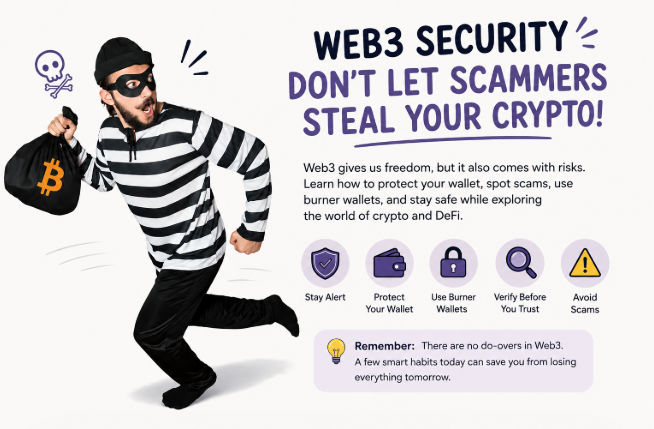
Before connecting your wallet to any website, take a moment to check if the project is actually legitimate.
I usually verify links through official X accounts, project websites, or community channels. I never trust random links sent through DMs or comment sections.
Scammers often create websites that look almost identical to real ones, so checking the URL carefully can save you from a costly mistake.
Use a Burner Wallet
A burner wallet is basically a secondary wallet used for testing new projects, claiming airdrops, or interacting with unfamiliar dApps.
I keep my main assets in one wallet and use a burner wallet whenever I'm trying something new.
That way, even if a project turns out to be malicious, my important assets remain protected.
It's one of the easiest security habits anyone can adopt.
Watch Out for Red Flags
Many scam projects share the same warning signs.
Some common red flags include:
- Anonymous teams with no history
- Unrealistic rewards or guaranteed profits
- Fake urgency like "Claim now or miss out!"
- Copied websites and poor documentation
If something sounds too good to be true, it probably is.
Read Before You Sign
Many users lose funds because they approve transactions without understanding what they're signing.
Whenever your wallet asks for a signature or approval, take a few seconds to read it.
If anything looks suspicious or confusing, cancel the transaction and do more research first.
Revoke Old Approvals
Over time, your wallet may accumulate permissions from apps you no longer use.
That's why it's a good idea to review and revoke old approvals regularly.
Think of it as cleaning up your digital security footprint.
Protect Your Seed Phrase
This is the most important rule of all:
Never share your seed phrase with anyone.
No legitimate project, moderator, or support team will ever ask for it.
Store it securely and keep it offline whenever possible.
Final Thoughts
Most Web3 scams don't rely on advanced hacking. They rely on users acting too quickly.
Taking an extra minute to verify a website, read a transaction, or double-check a link can make a huge difference.
Stay curious, stay cautious, and remember: in Web3, your security is your responsibility.

Latest comments
0