


The Wurk Vault: How Platform Activity Powers a Sustainable Reward Ecosystem
The Wurk Vault is a reward distribution system within the Wurk ecosystem that connects platform activity directly to token rewards. Instead of relying on inflation or passive holding incentives, the vault is funded through real usage on the
Some relied entirely on inflation. Some rewarded passive holders forever. Some collapsed because there was no real connection between platform activity and token rewards.
What makes the Wurk Vault interesting is that it attempts to connect actual ecosystem usage with reward generation.
Instead of creating rewards from nowhere, the vault is directly tied to activity happening on the platform itself.
That changes the dynamics completely.
What Is the Wurk Vault?
At its core, the Wurk Vault is a reward distribution system connected to the Wurk ecosystem.
The platform enables users, builders, marketers, and AI projects to launch microjob campaigns. These campaigns help projects onboard users, gather testers, generate engagement, collect feedback, and grow communities.
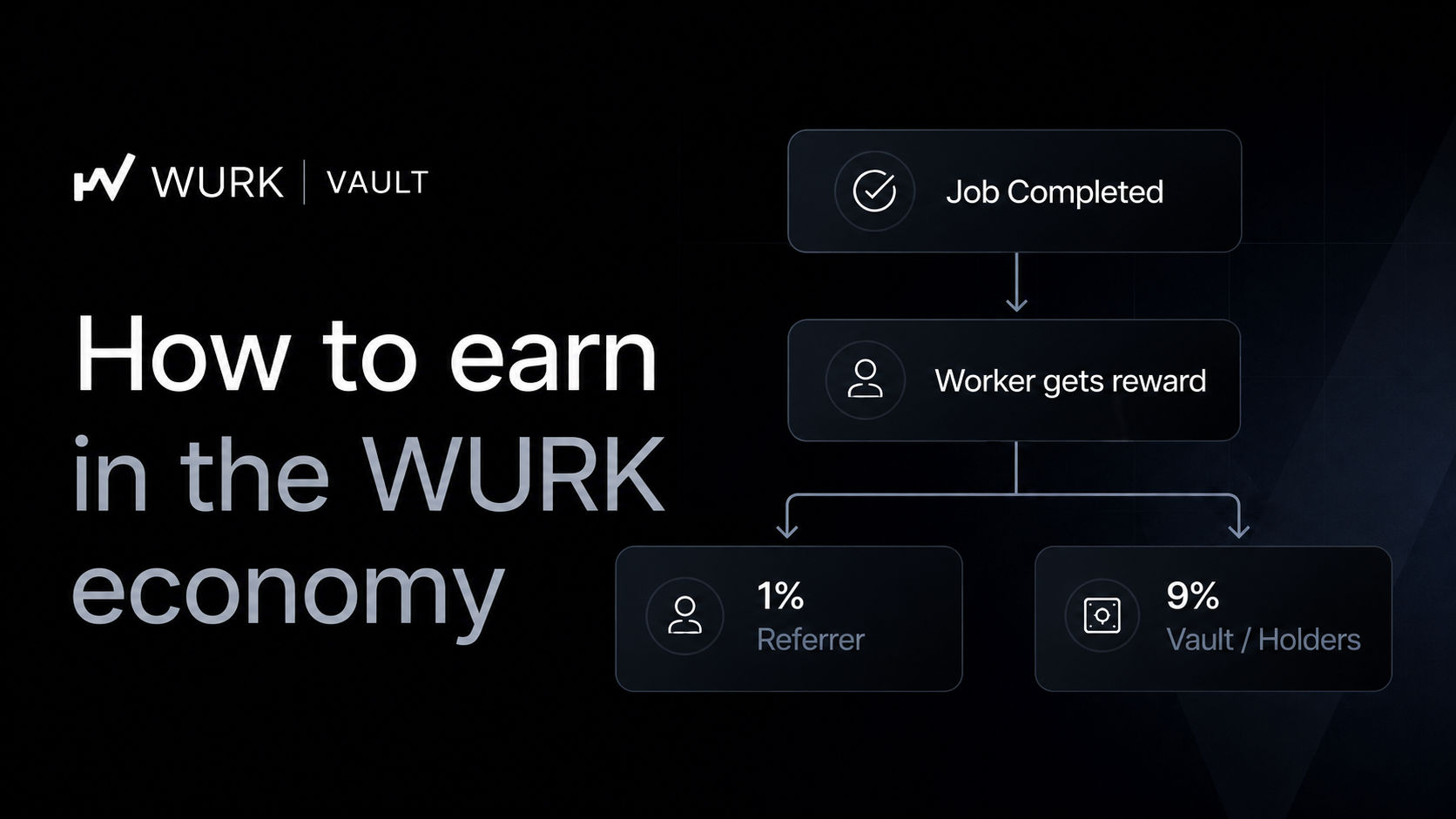
As activity happens across the platform, part of the generated value flows back into the vault.
The vault then distributes rewards to eligible participants.
This creates an ecosystem where:
platform usage generates value value replenishes the vault vault rewards incentivize participation participation helps grow the platform further
Instead of separating holders from platform activity, Wurk connects them together.
That ecosystem loop is one of the most important parts of the model.
How the Vault Reward System Works
The vault distributes rewards to eligible WURK holders.
However, the reward structure changed significantly after the March update.
Before March:
Anyone holding at least 100k WURK tokens qualified for vault rewards Rewards were distributed broadly across passive holders Many wallets simply farmed rewards without participating in the ecosystem
After March:
Rewards became limited to holders with 100k+ WURK who are also active on the platform Passive farming was reduced Rewards became concentrated among ecosystem participants
This was a major shift in incentive design.
Instead of rewarding inactivity, the system began rewarding contribution.
That change appears to have made rewards significantly larger for active users because fewer passive wallets were splitting the vault distributions.
The result is a much tighter relationship between:
activity contribution ecosystem growth reward generation
And that alignment matters.
Why Completed Jobs Matter
One of the most interesting mechanics in the Wurk ecosystem is how completed jobs help refill and sustain the vault over time.
Microjob activity is not isolated from the reward system.
As campaigns launch and users complete tasks:
platform activity increases ecosystem usage expands fees and economic activity grow the vault receives replenishment
This creates a feedback loop.
More activity can potentially mean:
more vault growth stronger distributions more incentive for users to participate more demand for campaigns more ecosystem engagement
In many crypto systems, staking rewards exist independently from actual platform usage.
Wurk attempts to tie the two together.
That makes the ecosystem feel more connected and potentially more sustainable over the long term.
Why Rewarding Active Users May Be Healthier
The March update was probably one of the most important changes to the vault system.
Rewarding all holders equally often creates a passive farming environment.
People buy tokens, hold them, collect rewards, and contribute nothing to ecosystem growth.
That may look good short term, but over time it can weaken the platform because:
engagement drops activity slows users become extractive rather than contributive
By shifting rewards toward active users only, Wurk changed the psychology of participation.
Now users are encouraged to:
complete jobs engage with campaigns remain active in the ecosystem contribute platform activity
This creates stronger alignment between users and the platform itself.
The most valuable participants become the people actually helping the ecosystem grow.
That model feels far more sustainable than purely passive reward systems.
Why Rewards Increased After March
A major outcome of the March update was larger rewards for active users.
The logic behind this is relatively simple.
Before:
rewards were spread across a large number of passive holders
After:
rewards became concentrated among active participants only
That means the reward pool was divided among fewer wallets.
As a result, active users received significantly larger distributions.
This creates stronger incentive for participation because users can clearly see the benefit of remaining active rather than simply holding tokens passively.
It also reduces inefficient reward leakage to inactive wallets.
The Connection Between Growth and Rewards
One of the strongest aspects of the Wurk model is the relationship between ecosystem growth and vault performance.
If platform activity grows:
more campaigns launch more users participate more builders onboard more jobs get completed more ecosystem value circulates
That activity can potentially strengthen the vault itself.
In other words, users, builders, and holders are all connected through the same ecosystem engine.
Builders benefit from user acquisition. Users benefit from incentives. Active holders benefit from vault rewards. The platform benefits from growth.
That interconnected structure is much more interesting than isolated token reward systems.
Transparency and Trust
Another important aspect is transparency.
Vault history, wallet tracking, and analytics help users monitor:
reward history wallet performance participation impact ecosystem activity
Transparent systems tend to build stronger trust because users can actually observe how rewards are functioning over time.
In crypto, transparency is extremely important.
Users want to see:
where rewards come from how distributions happen whether the system is sustainable
The more visible the ecosystem becomes, the more confidence users may have in participating long term.
Why This Model Is Interesting
Personally, what makes the Wurk Vault interesting is not simply the rewards themselves.
It is the incentive alignment.
The system attempts to connect:
platform usage economic activity holder incentives user participation ecosystem growth
Many projects struggle because their token systems become disconnected from actual utility.
Wurk is trying to build a loop where activity fuels rewards and rewards encourage further activity.
That is a far healthier direction than pure speculative farming models.
The move toward rewarding active participants also feels important.
The internet is increasingly shifting toward contribution-based ecosystems where value flows toward users who actively help networks grow.
Wurk’s vault structure reflects that broader trend.
Final Thoughts
The Wurk Vault represents more than just a reward system.
It represents an attempt to create a self-reinforcing ecosystem where:
builders launch campaigns users complete jobs activity generates value the vault distributes rewards active participation strengthens the platform
The March update significantly improved the alignment of that system by prioritizing active ecosystem participants over passive farming wallets.
That change likely made the ecosystem healthier, more efficient, and more sustainable over time.
As the platform grows, the relationship between ecosystem activity and vault rewards could become one of the most important parts of the Wurk model.
And in a crypto industry searching for sustainable incentive systems, that makes Wurk worth watching.





Latest comments
0