


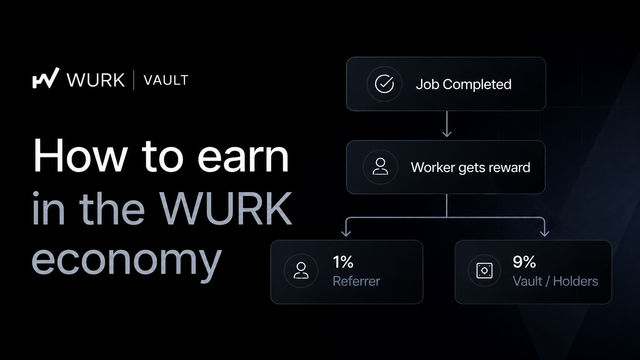
I've been spending a lot of time on Wurk.fun lately and the more I look into how the vault works the more I think it's one of the more interesting setups I've seen on Solana. Not because it's complicated — it's actually pretty simple — but because of who it rewards and why that matters. So Wurk.fun is a microjob platform. Projects pay SOL to get their content promoted, mostly reposts on X, and users earn SOL for completing those jobs. But underneath that there's a layer most people don't think about. Every time a job gets posted and completed, a portion of the platform fees flow into something called the Wurk Vault. That SOL gets converted into $WURK and distributed back out to eligible holders every three hours. Automatically. No claiming, no staking dashboard, it just shows up. So the vault is basically a profit-sharing pool funded by real usage. The more jobs get created and completed, the more it fills, the bigger each payout gets. It's not printed from nowhere — it comes from actual activity on the platform. To qualify you need to hold at least 100k $WURK. LP tokens and treasury wallets are excluded so it goes to real community members. But this is where things got more interesting in March. Before March the vault paid everyone holding 100k or more. Didn't matter if you'd never touched the platform once. Just hold, collect, done. That changed. Now you also have to be active on the platform to qualify. When I read that I thought that's actually a big deal. When you remove passive holders from the pool but the vault keeps filling at the same rate, the math shifts hard toward people who actually show up. Fewer wallets splitting the same rewards means each active wallet earns noticeably more. But beyond the numbers the logic is what gets me. Passive reward systems attract a specific kind of person — someone who buys the token, sits on it, collects yield and eventually sells. They don't generate fees, don't bring users, don't do anything useful. They're just taking. By tying rewards to activity Wurk basically flipped that. The people earning the most are now the same people completing jobs and keeping the vault funded. Active users fill the vault and the vault pays active users back. It's almost circular in a good way. The cycle goes like this — projects post jobs, users complete them, fees go into the vault, vault pays active holders, those holders keep using the platform, more jobs get done, vault fills faster. Every part feeds the next. It's not draining a fixed pool, it grows when the platform grows. It's also fully transparent which I think matters more than people give it credit for. There's a vault searcher where you can plug in any wallet and see its full distribution history. I've been watching the wallet AGENTDQ57y57HVEsXXofZmBxUc8RQWKH7DwXRLYeVQHY because it started with exactly 100k WURK, the minimum, so it's a clean baseline for what an active holder at the floor actually earns. If you're trying to get a real sense of current rewards I'd look at the last month of data only. Pre-March numbers reflect the old model where rewards were spread across passive holders too so the comparison isn't fair. A lot of reward systems in crypto look great for a few months then fall apart when the treasury runs out or the token dumps. What's different here is the vault refills based on demand for the platform itself. If more projects want promotion, more SOL flows in. The rewards aren't subsidized, they're generated by real economic activity. I'm not saying it's perfect or that everything about it is guaranteed to work out. But the direction of it makes sense to me. Builders get promotion, users get paid for actual work, holders get a share of the platform's growth, and after March the holders earning the most are the ones keeping the whole thing alive. That's a better loop than most of what's out there.
Conversation
Join the conversation
Share your thoughts with the author and other readers.
Comments0
Checking your account…
Related blogs


I Don’t Want You Getting Rekt: The No-BS Guide to Web3 Wallet Security
Getting paid in crypto feels like magic, until a bad click wipes your balance. In Web3, you are the bank. Check out our no-BS guide to burner wallets, revoking approvals, and securing your hard-earned bags.

How to Earn Rewards as a Holder
The WURK Vault rewards active holders through real platform activity, not token inflation. Every completed job contributes back into the ecosystem, creating sustainable rewards. WURK on Solana.


🎨 Betting on Myself as an Artist: When Skill Becomes a Real Opportunity
Summary: This blog explores what it really means to take yourself seriously as an artist. It highlights the mindset shift from seeing art as just a hobby to recognizing it as something that can create real opportunities. It also touches on
Latest comments
0