

The Wurk Vault: Turning Platform Activity Into Holder Rewards
Crypto projects often talk about “community rewards,” but many reward systems are too passive. People buy a token, hold it, and wait. There is nothing wrong with holding, but if an ecosystem only rewards passive ownership, it can slowly bec
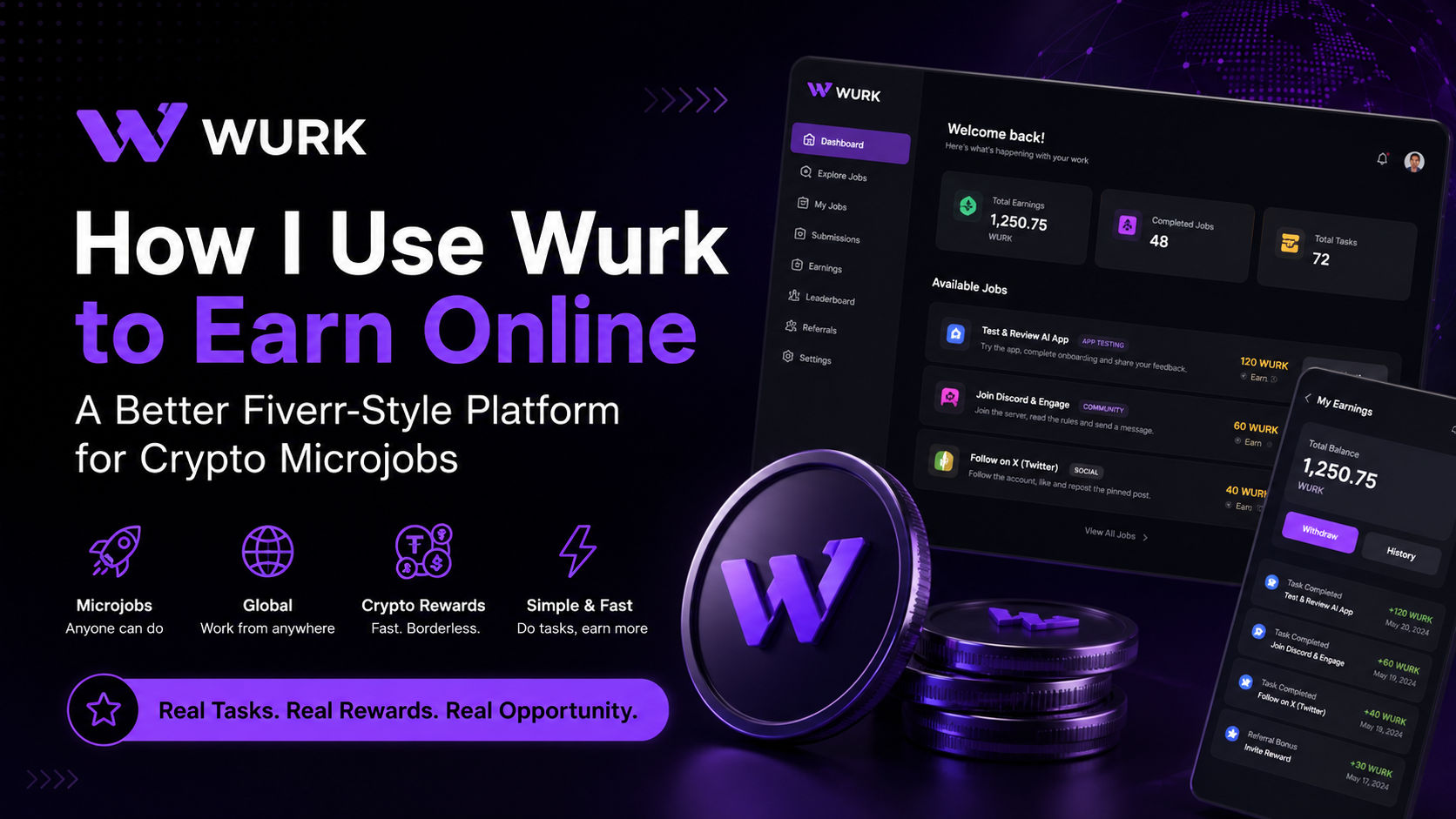
Wurk is not just a token. It is a microjob platform where builders, creators, AI agents, and users can interact through small paid tasks. People can create jobs, complete jobs, test products, give feedback, support campaigns, and earn rewards. The Vault connects this platform activity back to eligible $WURK holders, creating a loop between real usage and token rewards.
In simple terms: the more active the Wurk ecosystem becomes, the more meaningful the Vault can become.
What Is the Wurk Vault?
The Wurk Vault is a reward distribution system connected to the Wurk platform. Wurk allows creators, projects, and even AI agents to post microjobs. These can include social engagement tasks, product feedback, UI reviews, opinion polls, app testing, and other small jobs that real humans can complete.
When jobs are created and completed, platform activity generates value inside the ecosystem. A portion of that value can flow back through the Vault and be distributed to eligible $WURK holders.
The important part is that the Vault is not just a random giveaway system. It is designed to connect platform activity with token-holder rewards. That means holders are not only watching the project from the outside. They are connected to the usage of the platform itself.
How Vault Rewards Are Distributed
Vault rewards are distributed regularly to eligible holders. According to Wurk’s own Vault page, $WURK holders receive platform revenue distributions every 3 hours through the Vault.
Before March, the reward rule was broader. Any holder with at least 100,000 WURK tokens could receive Vault rewards. This meant the system rewarded all qualifying holders, whether they were active on Wurk or simply holding passively.
After the March update, the system changed.
Now, Vault rewards are distributed only to holders with 100,000+ WURK who are also active on the platform. This is a major difference. It means the Vault no longer rewards every eligible wallet equally just for holding. Instead, it rewards holders who also participate in the ecosystem.
That update changed the purpose of the reward system. It moved Wurk away from passive farming and toward activity-based participation.
Why Completed Jobs Help Refill and Grow the Vault
The core engine of Wurk is microjob activity.
A builder might pay users to test an app. A creator might pay for social engagement. A project might launch a campaign to get feedback, reviews, votes, comments, or user-generated content. AI agents can also use Wurk to hire humans for simple tasks, feedback, and decision support.
Every job creates movement inside the platform.
When jobs are completed, workers earn. Builders receive useful output. The platform gains transaction activity. The Vault then becomes part of this loop by distributing rewards back to active eligible holders.
This creates a healthier structure than a reward pool that only drains over time. If the platform keeps growing and more jobs are created, the Vault has more activity connected to it. That is why completed jobs matter. They are not just tasks. They are the fuel of the Wurk distribution ecosystem.
The Ecosystem Loop: Builders, Workers, Holders
The Wurk model is interesting because it connects three different groups:
Builders and creators get access to real users. They can launch campaigns, test products, collect feedback, and grow their projects without needing a massive marketing budget.
Workers and users earn by completing small jobs. They do not need special technical skills. They just need to participate, complete tasks properly, and bring real human input to the platform.
Holders benefit when they are also active participants. Instead of only holding and waiting, they are encouraged to engage with the platform, complete jobs, and help generate ecosystem activity.
This creates a more aligned system. Builders want jobs completed. Workers want earning opportunities. Active holders want the platform to grow because growth can support stronger Vault rewards.
That is a much better loop than a system where rewards are given out with no connection to usage.
What Changed After March?
The March update was one of the most important changes to the Vault reward system.
Before March:
Holders with at least 100,000 WURK were eligible for Vault rewards, even if they were not active.
After March:
Holders still need at least 100,000 WURK, but they also need to be active on the platform to receive rewards.
This changed the distribution from a passive holder model to an active holder model.
The result is simple: fewer wallets are eligible, but those eligible wallets are more connected to the platform. Because rewards are no longer spread across every passive qualifying holder, active users can receive a larger share.
That is why many active participants saw larger rewards after the March update. It was not necessarily because the entire system suddenly became bigger overnight. It was because the reward pool became more focused on the people actually contributing activity.
Why Rewards Became Larger for Active Users
When a reward pool is distributed to a large number of wallets, each wallet receives a smaller portion. Before March, passive holders with 100k+ WURK could still receive rewards. That meant active users had to share the Vault with people who were not necessarily helping the platform grow.
After the update, passive farming was reduced.
Now, rewards are more concentrated toward active ecosystem participants. This makes the system feel more merit-based. If someone is holding WURK and actually using the platform, they are more aligned with Wurk’s growth than someone who only farms rewards passively.
This is one of the biggest reasons the model became more interesting after March. It creates a stronger incentive to participate instead of just sitting on tokens.
Why Active Holder Rewards May Be Healthier
Passive rewards can attract short-term farmers. They buy enough tokens to qualify, collect rewards, and may not care about the platform’s actual success.
Activity-based rewards can attract better participants.
When users need to be active, they are more likely to understand the platform, complete jobs, support campaigns, test tools, and contribute to real usage. This helps Wurk become more than just a token chart. It becomes a working marketplace.
That is important because sustainable ecosystems need activity. They need people doing things. They need buyers, workers, feedback, campaigns, and repeat usage.
Rewarding active users encourages exactly that.
Why the Vault Model Is Interesting
The most interesting part of the Wurk Vault is that it tries to connect rewards to behavior that actually helps the ecosystem.
A holder who completes jobs is not just earning. They are helping campaigns succeed. A builder who posts jobs is not just spending. They are creating earning opportunities for workers and adding activity to the platform. A worker who gives feedback is not just doing a small task. They may be helping improve a product’s UX, onboarding, or marketing.
That is a strong ecosystem design because everyone is connected.
Wurk also becomes especially relevant in the AI era. Today, building apps with AI is easier than ever, but getting real users is still hard. Builders need testers, feedback, engagement, and early adopters. Wurk gives them a direct way to launch small campaigns and reach real people.
At the same time, Wurk’s support for agent-driven workflows through x402, MPP, MCP, and other integrations makes the platform feel future-facing. AI agents can hire humans, and humans can provide the real-world judgment that AI still needs.
A Simple Example
Imagine an indie builder launches a new AI note-taking app.
The app works, but the builder needs feedback. Are users confused by the onboarding? Is the pricing page clear? Do people understand the main feature? Would they actually use it?
Instead of spending thousands on ads, the builder can create a Wurk campaign asking 50 users to test the app and answer a few questions. Those users earn for their time. The builder gets real feedback. Some users may become early adopters. The platform gets activity. Active holders stay connected to the ecosystem through the Vault.
That is the kind of loop that makes Wurk useful.
It is not only about rewards. It is about turning small human actions into platform growth.
Final Thoughts
The Wurk Vault is interesting because it rewards more than ownership. After the March update, it rewards active participation.
That change matters.
By moving from “all 100k+ holders” to “active 100k+ holders,” Wurk made the Vault more focused, more intentional, and potentially more sustainable. Rewards became larger for active users because passive farming was reduced. More importantly, the system now encourages people to actually use the platform.
In my opinion, this is a healthier model for a microjob ecosystem. The people who help create activity should be the people most connected to the rewards. Builders get users. Workers get paid. Active holders benefit from platform activity. The Vault becomes the bridge between all three.
That is why the Wurk Vault is more than a reward pool. It is the distribution engine of the Wurk ecosystem.
Latest comments
0