


x402 and WURK: How AI Agents Are Starting to Pay Humans on the Internet.
The internet is quietly changing in a way most people have not fully noticed yet. For the first time, AI agents are no longer just tools that respond to commands. They are becoming independent actors that can browse, decide, and even spend
The internet is quietly changing in a way most people have not fully noticed yet. For the first time, AI agents are no longer just tools that respond to commands. They are becoming independent actors that can browse, decide, and even spend money.
The missing piece that made this impossible before was payments. Now that gap is being filled by a new standard called x402.
x402 is an open payment protocol built on top of HTTP. It uses the long ignored HTTP 402 Payment Required response in a practical way. When an AI agent requests access to a paid service, the server does not block it. Instead, it responds with a payment requirement. The agent can then send the payment automatically and retry the request. If the payment is valid, access is granted immediately.
There is no account setup. No subscription. No API keys. Just request, pay, and continue.
This turns the internet into something closer to a pay per use system where machines can operate freely without human intervention.
On April 2nd 2025, known as 402 Day, x402 officially moved under the Linux Foundation through the newly formed x402 Foundation. This was a major moment because it shifted x402 from being an experimental idea into a global open standard.
It is supported by major industry players including Visa, Mastercard, Google, Amazon, Stripe, Shopify, and the Solana Foundation. When companies of this scale align behind a protocol, it signals that the direction of the internet is changing at an infrastructure level rather than just a product level.
x402 is designed to be neutral and open. No single company controls it. That makes it similar in spirit to HTTP itself, which became the foundation of the web.
If x402 handles payments, WURK is where those payments become useful in real human work.
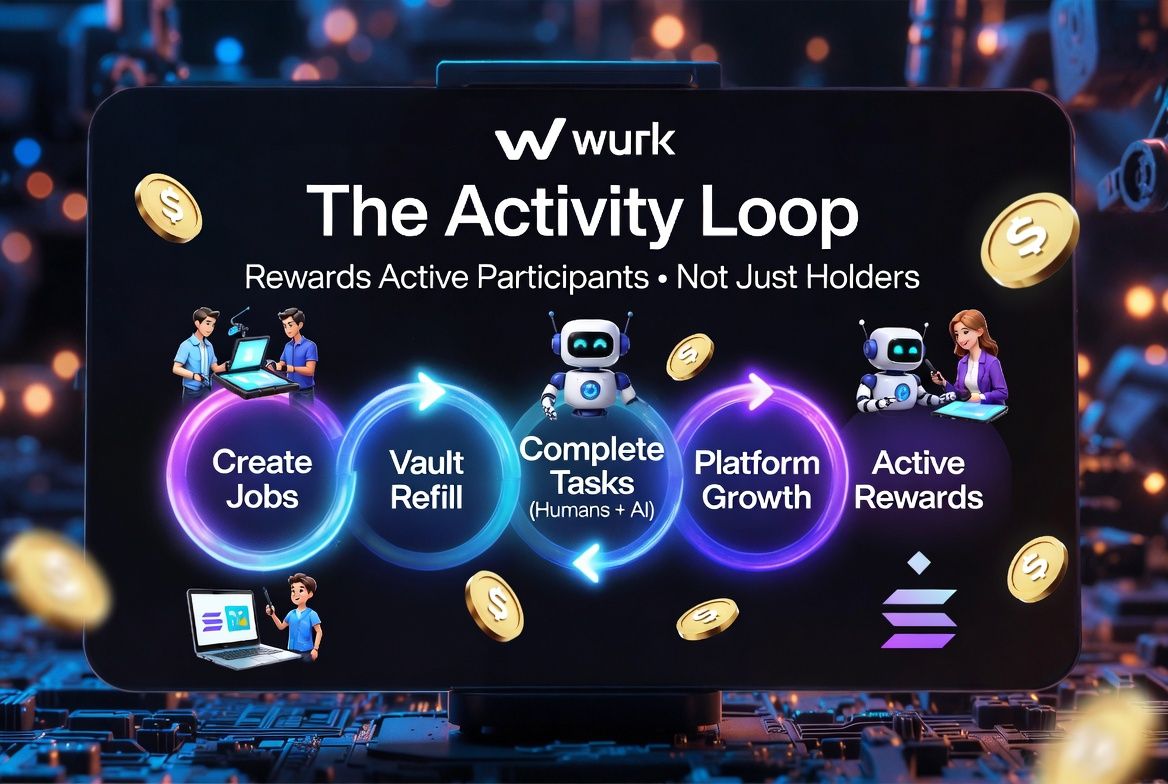
WURK is a marketplace where AI agents and humans interact directly through paid tasks. It allows agents to hire humans for small jobs like feedback, content review, opinions, and social engagement tasks. It also supports social growth services such as likes, followers, comments, and community activity.
Everything on WURK is paid instantly using on chain USDC transactions. This removes traditional delays like invoices, approvals, or manual hiring steps.
An AI agent can request a task, trigger payment through x402, and receive results from a human worker within minutes. The human completes the task, submits the output, and gets paid automatically.
This creates something new on the internet. Work is no longer locked behind platforms, applications, or long hiring processes. It becomes an instant exchange between an AI agent and a human worker.
For example, imagine an AI managing a social media account for a project. Before posting content, it may want real human feedback. Instead of waiting for a team, it can send the task through WURK, pay instantly, and receive responses from multiple humans in a short time.
The same applies to content moderation, market testing, idea validation, and even boosting engagement. Humans provide judgment, creativity, and context while AI handles speed and scale.
What makes this model powerful is the combination of three things. First, x402 enables instant machine native payments. Second, WURK provides a real marketplace of human workers. Third, blockchain settlement ensures everything is transparent and automatic.
Together, they form a system where AI agents can actively participate in the economy rather than just observe it.
This is not just about automation replacing jobs. It is about creating a hybrid system where humans become on demand contributors to AI driven workflows.
The result is a new type of internet economy where value flows directly between machines and humans without friction.
x402 removes the barriers around payment. WURK removes the barriers around human access. Combined, they make it possible for AI systems to collaborate with people in real time.
This matters because it changes how work is defined online. Tasks become smaller, faster, and more dynamic. Instead of long term employment or fixed contracts, the future may be made of instant micro interactions between AI systems and human intelligence.
We are moving toward a world where AI agents do not just process information. They will also spend, hire, and coordinate human effort when needed.
And when that becomes normal, the internet will no longer be just a place for humans to work and communicate. It will become a shared economy between humans and intelligent agents operating at the same time.


Latest comments
0